
Luís Vaz de Camões
“The soul of Portugal”
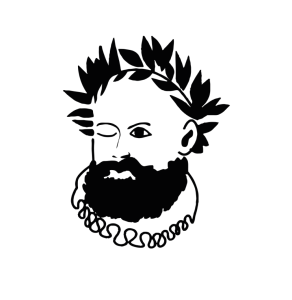
With the immortal words of Luís de Camões, “All the more reason that // Eternal glory // Who makes works // So worthy of memory”, we pay homage to one of the greatest poets of all time and the father of Portuguese literature. “Os Lusíadas”, His masterpiece is a hymn to our history, a song to our identity and a testimony to our adventurous spirit.
Camões is not just a poet, but a symbol of our culture and language. His work transcended Portugal’s borders, influencing world literature and consolidating the Portuguese language as a rich and expressive language.
By choosing Camões as one of our first logos, Portugal Nice Things celebrates a legacy that inspires us to strive for excellence, to value our history and to build a future worth remembering. Just as Camões eternalized the deeds of our ancestors, we want to eternalize the beauty and richness of Portuguese culture.

Portuguese Caravel
More than a ship, a legacy.
The caravel, our emblematic logo, is not just a ship. It represents a people who dared to challenge the oceans and conquer the world. With it, the Portuguese sailed overseas, taking their language, culture and adventurous spirit with them.
Caravels were more than just ships, they were true time machines, transporting us to an era of discovery and innovation. Thanks to their audacity and ingenuity, Portuguese navigators uncovered new sea routes, established trade relations with distant peoples and enriched human history.
Today, the caravel remains a symbol of national pride, representing our history, our culture and our identity. It is a reminder that we are a people of navigators, always in search of new horizons. The caravel inspires us to move forward, overcome challenges and build a promising future.
Portuguese guitar
The Portuguese guitar, with its unmistakable sound, is much more than a musical instrument. It is the soul of Portugal, a reflection of our history, our emotions and our way of being.
With roots that go back to instruments such as the cistre, the Portuguese guitar has evolved over the centuries, shaped by oral tradition and the influences of different cultures. Its twelve strings, tuned in pairs, produce a rich, vibrant sound that accompanies the fado singer’s voice in an exciting dialogue.
The Portuguese guitar is not a single instrument. There are different types, such as the Lisbon guitar, with its bright sound, and the Coimbra guitar, with a deeper, more serious tone. Each one has its own characteristics that make it special.
The link between the Portuguese guitar and fado is inseparable. The guitar’s melancholy melody, in perfect harmony with the fado singer’s voice, evokes deep feelings of longing, love and hope. Over the years, the Portuguese guitar has accompanied the evolution of fado, adapting to new times without losing its essence.
More than a musical instrument, the Portuguese guitar is a symbol of national identity. Its sound, full of emotion and nostalgia, transports us to a Portugal of memories and traditions. Preserving the Portuguese guitar is preserving a cultural treasure that connects us with our roots and inspires us to build a future based on our rich history.

Barcelos Rooster
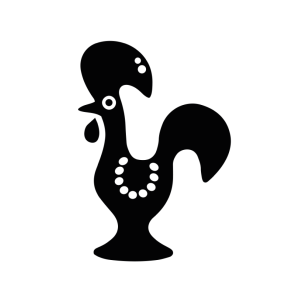
The Barcelos Rooster, with its intriguing and miraculous legend, is one of Portugal’s most iconic symbols. The story of an unjustly accused pilgrim and a roast cockerel who miraculously crows to prove his innocence has transcended the borders of Barcelos, becoming known all over the world.
The various versions of the legend, enriched by mystical and religious elements, have transformed it into a universal symbol of justice and hope. The image of the rooster, with its raised crest and defiant gaze, has become an icon of Portuguese culture, present in various handicraft products, souvenirs and even advertising campaigns.
As well as being a tourist attraction of great importance to the Barcelos region, the Barcelos Rooster also carries with it timeless values. The lesson that we shouldn’t judge people by their appearances is a relevant message for all times. Faith in justice and hope for a better future are sentiments that resonate with people of different cultures and beliefs.
The legend of the Barcelos Rooster is more than just a story. It is a cultural legacy that inspires us to question our own beliefs and seek the truth, even in the face of adversity.
The Sardine
More than just a fish, the sardine is an icon of Portuguese culture. Present on our tables since time immemorial, it has transcended gastronomy to become a national symbol, celebrated in songs, arts and traditions.
Treasure of the sea, the sardine, with its succulent flesh and remarkable flavor, has always occupied a prominent place in the Portuguese diet. Historically, it was a food that was accessible to all social classes, but its importance transcended economic issues. Sardines have become a fundamental element of national identity, associated with moments of celebration and conviviality.
From the grill to the can, the most traditional way to enjoy sardines is grilled, with coarse salt and a touch of olive oil. But the versatility of this fish allows for a multitude of preparations, from preserves in olive oil, perfect for a quick snack, to oven-roasted sardines, accompanied by potatoes and vegetables. The ideal time to enjoy fresh sardines is between spring and autumn, when they are at their plumpest and tastiest.
Once an icon of popular culture, the sardine has transcended the limits of gastronomy and become an inspirational muse for artists and creators. Bordallo Pinheiro’s ceramics, with their colorful and expressive sardines, are an emblematic example of the presence of this fish in Portuguese popular art. In addition, the sardine is often quoted in songs, proverbs and popular expressions, revealing the depth of its connection with Portuguese culture.
In Portugal, no popular festival is complete without the unmistakable aroma of grilled sardines. During the arraiais, the streets of the historic districts are transformed into true gastronomic celebrations, where the sardine is the queen of the table, accompanied by boiled potatoes and salad or just with bread and good wine.

Coração de Viana in Filigree
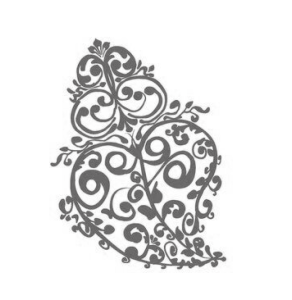
Born on Portuguese soil more than three centuries ago, the Coração de Viana, with its delicate filigree, is a living testimony to our history and tradition. Transcending fashions and trends, this timeless jewel has won the hearts of generations, becoming a symbol of love, faith and belonging. A legacy that lives on, carrying with it the soul of a people, the beauty and art of Portuguese goldsmithing.
Although Queen Maria I is often cited as one of the first to popularize the Coração de Viana, it was in the 19th century that the jewel became a symbol of the bourgeois ladies of Viana do Castelo.
Despite the name, production was concentrated in towns such as Póvoa do Lanhoso and Gondomar, where goldsmiths’ workshops created the pieces.
Initially a religious symbol representing divine love, the Heart of Viana evolved into a romantic love charm, adorned on necklaces, earrings and rings. Filigree, the defining characteristic of today’s jewelry, was introduced later, replacing the first gold plate versions.
Fernando Pessoa
Fernando Pessoa, recognized worldwide as one of Portugal’s greatest poets, transcended the limits of literature to become a cultural icon. His complex figure, marked by multiple literary personalities and a vast and profound oeuvre, has inspired a multitude of artistic representations.
Pessoa’s image, with its peculiar physical features, has been explored by artists from various fields, resulting in a rich variety of caricatures, illustrations and sculptures. Each of these representations, influenced by the different facets of his personality and work, has contributed to the construction of a popular imaginary around the poet.
The complexity of his work, with its heteronyms, has further expanded the possibilities of interpretation and artistic representation. With each new look, Pessoa reveals himself in a different way, challenging and delighting his admirers.
However, Pessoa’s popularity has also generated debate and controversy. The commercial exploitation of his image, although it has contributed to its dissemination, raises questions about the preservation of his legacy and the authenticity of the representations.
Regardless of the different interpretations, the figure of Fernando Pessoa remains a symbol of Portuguese culture, inspiring new generations of artists and readers.

Swallow
The swallow, with its elegant silhouette, is a constant presence in the Portuguese sky – they return year after year to the same nest. Over the centuries, this migratory bird has earned a special place in the hearts of the Portuguese, becoming a true national icon.
The swallow’s association with longing and return has been even stronger since the Overseas War, when many families placed them on their balconies as a symbol of hope and desire for reunion. This practice strengthened the emotional bond between the bird and the Portuguese people, who see it as a symbol of courage, freedom and romance.
The swallow is also deeply rooted in Portuguese popular culture. Its representations in clay and ceramics, found in countless homes, bear witness to the importance of this bird in the national identity. The ceramic swallows, with their vibrant colors and delicate shapes, are true works of art that convey the joy and lightness of the Portuguese people.
Contact
Address: Praça de Londres 10, 1000-189 Lisboa
E-mail: info@portugalthings.pt
Phone: 21 845 0884
(Call to national fixed network)

Contact
Address: Praça de Londres 10, 1000-189 Lisboa
E-mail: info@portugalthings.pt
Phone: 21 845 0884
(Call to national fixed network)